
Rethinking what help looks like - 11/05/2026
"We can't arrest our way out of this, and arrest very rarely will get us where we need to be."
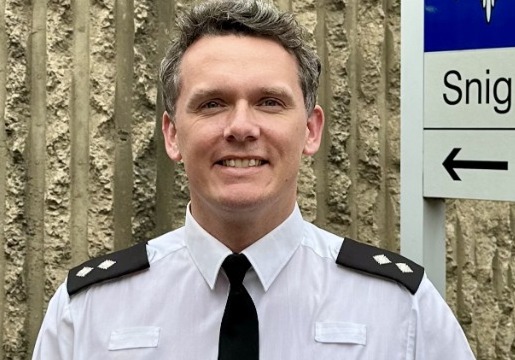
That's how Inspector Andrew Rimmer, who leads Sheffield's City Centre Neighbourhood Policing Team, describes the challenge his team faces every day, and the approach they've chosen to meet it.
Andrew's team works across Sheffield city centre, engaging with people who are rough sleeping or living street-based lifestyles. Alongside enforcement, their focus is on prevention and partnership: understanding why people are on the streets, connecting them to the right services, and supporting them to move away from street-based lifestyles.
However, Andrew is empathetic when the general people tell him they feel unsafe in the city centre. People may say they're put off coming into town because of the behaviour of a small number of people. That concern sits firmly on his shoulders.
"The people we encounter are not people who have simply chosen this life," said Andrew. "Overwhelmingly, they are people who have been failed by other services and fallen through the gaps, carrying combinations of substance misuse, mental health difficulties, brain injury, trauma and PTSD."
That understanding shapes everything about the way Andrew's team operates. Officers approach people on the streets with conversation first.
- Are you aware of the services available?
- What's going on for you right now?
- How can we help connect you to the right people?
If you see someone as a person who needs help, you police them very differently to seeing them as a person to be moved on.
One example of this approach in practice is the team's use of naloxone, the medication that can reverse the effects of an opioid overdose. Carrying naloxone isn't mandatory for police officers nationally, but every officer on Andrew's team chooses to carry it.
"Even if someone says they've taken spice, we just don't know what it's laced with now. It could be laced with nitazines or all sorts," said Andrew. "So when we come across someone in distress, or receive a report, we act."
That readiness to act, and the relationships built through consistent presence on the same streets, day after day, has quietly shifted something in how the street community relates to the police. A few years ago, Andrew says, when his officers approached people, the response was often just abuse. Now there's a conversation. Outreach workers and services across the city have noticed the same change. The language has shifted, and Andrew sees that as a real marker of progress.
Andrew is careful not to present his team's work as a choice between compassion and enforcement.
"We can't arrest people for looking messy," said Andrew. "Community safety that lasts isn't built on moving people out of sight. It's built on understanding why they're there, and working together to change it."
His team will still act when criminal offences are being committed. The PSPO, Public Spaces Protection Order, which sometimes attracts criticism as a purely punitive tool, is used primarily as a way of building a clearer picture of individuals' patterns of behaviour, so that the right interventions can be put in place.
Measuring success in this work, Andrew acknowledges, is rarely straightforward. Progress is slower and more fragile than a single outcome: someone housed, someone in treatment, someone turning their life around overnight. Success can mean a conversation where there used to be silence, or a person who finally feels able to ask for help.
"The change we're working towards doesn't happen overnight. But when it does happen, it's because we were there, consistently, and people knew they could trust us," said Andrew.
____________________________________________________________________
As told to Alison Wise for Help us Help, May 2026
Sheffield's City Centre Neighbourhood Policing Team works in partnership with a range of local organisations to support people living street-based lifestyles.